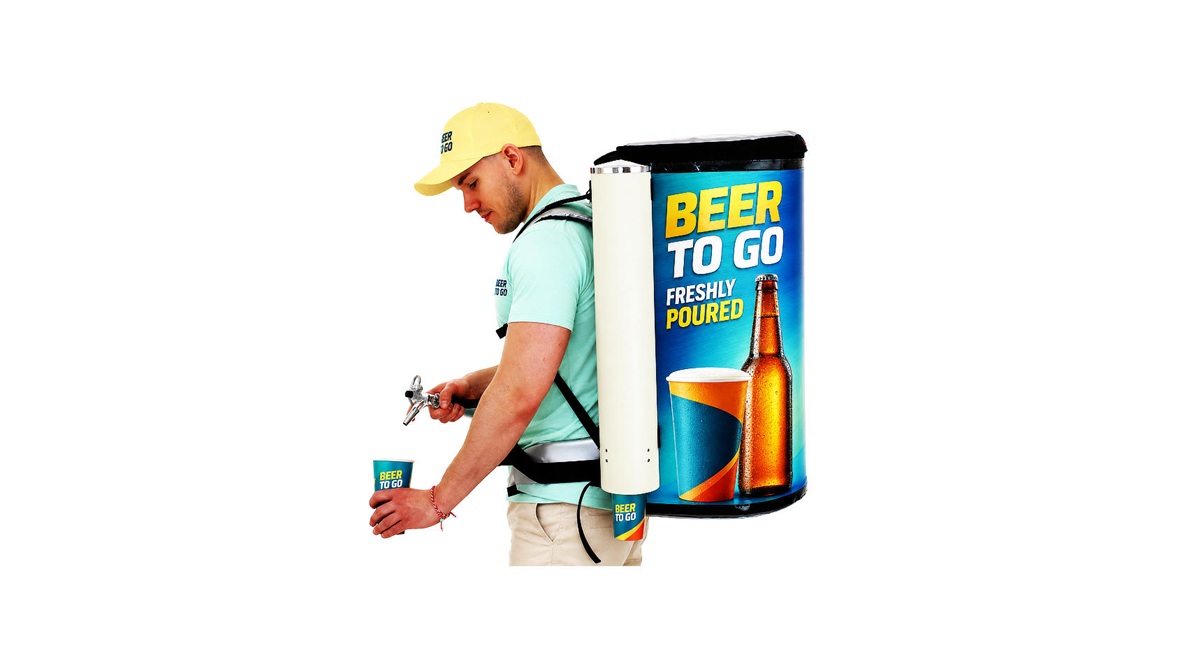
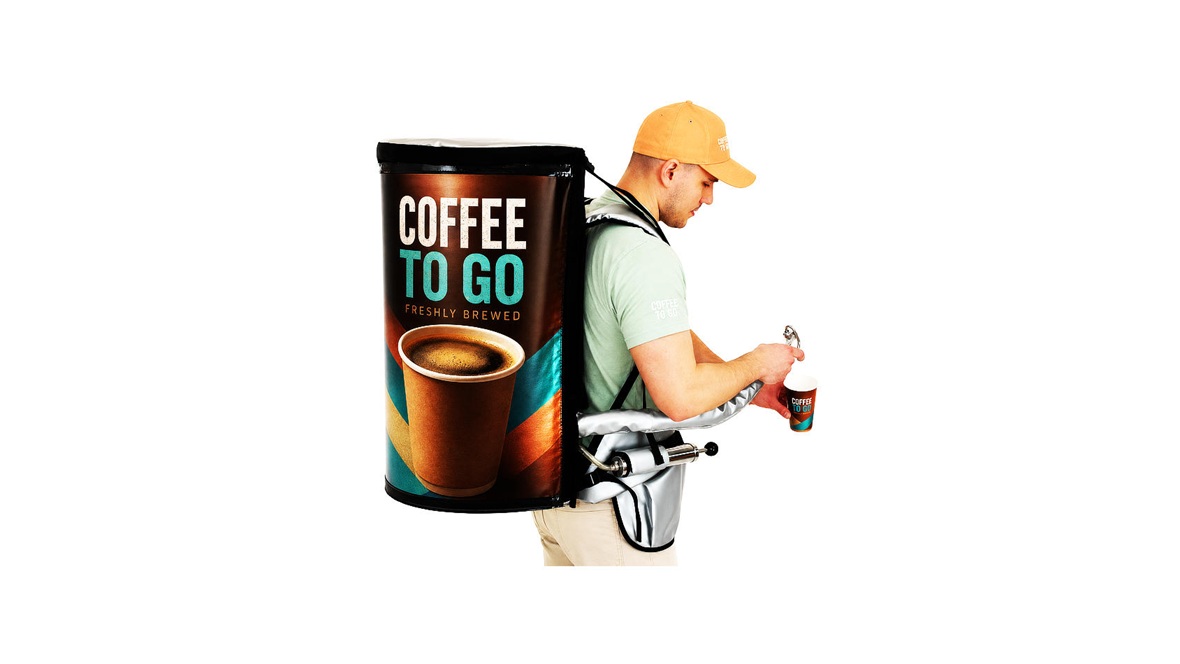
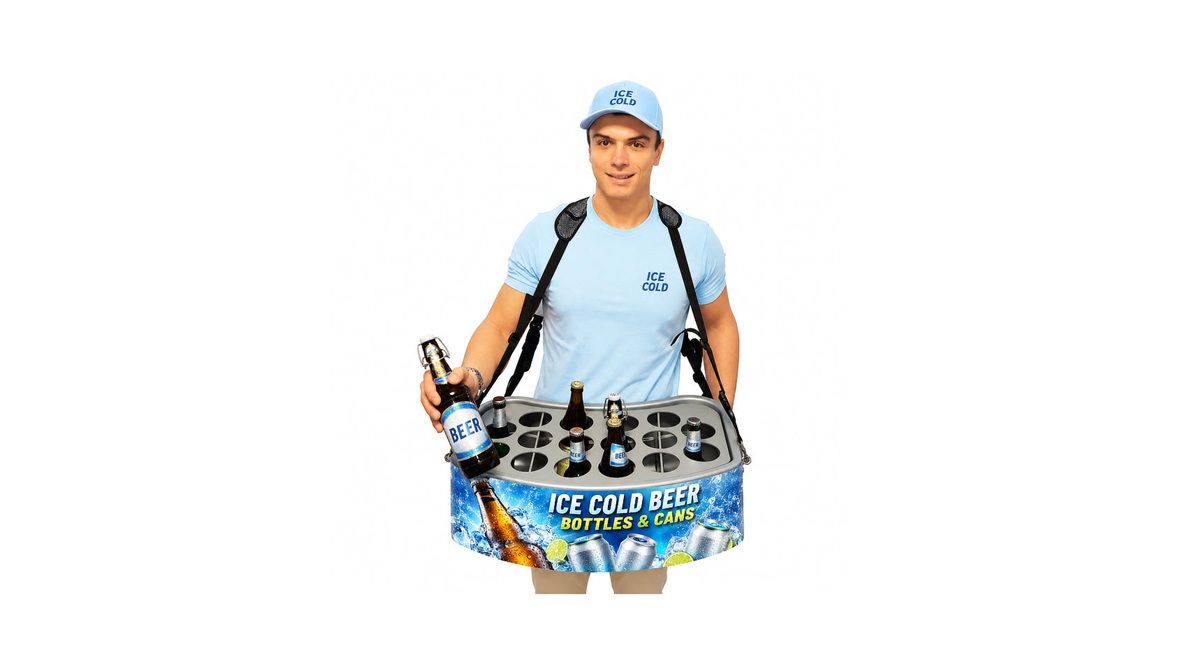
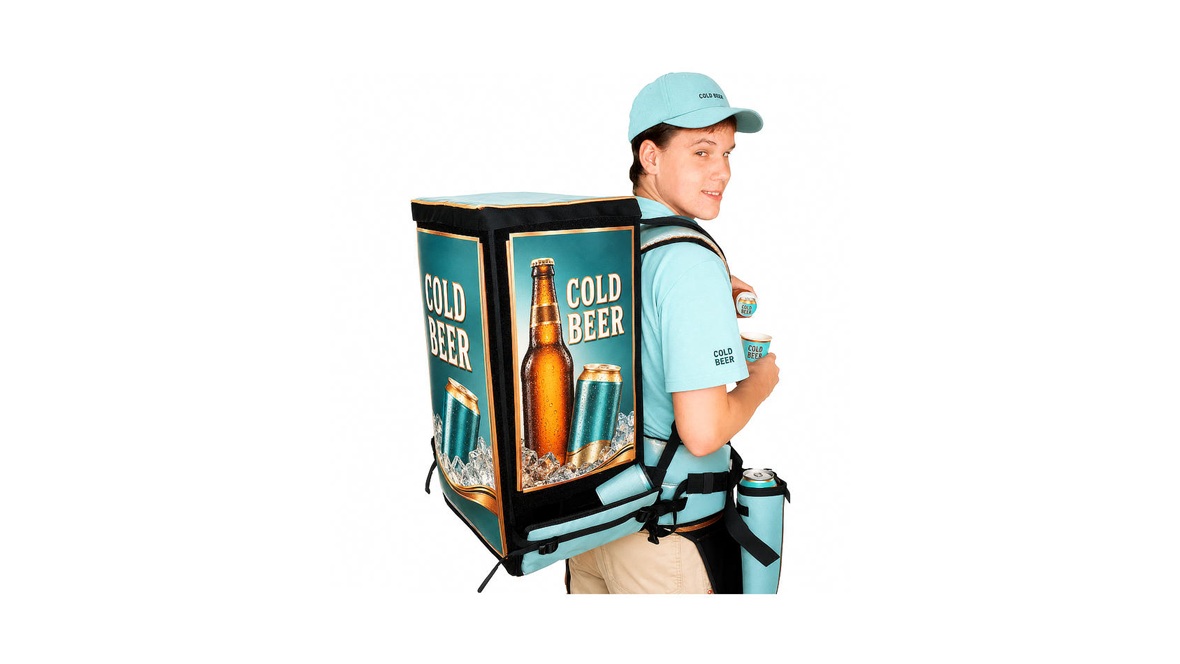
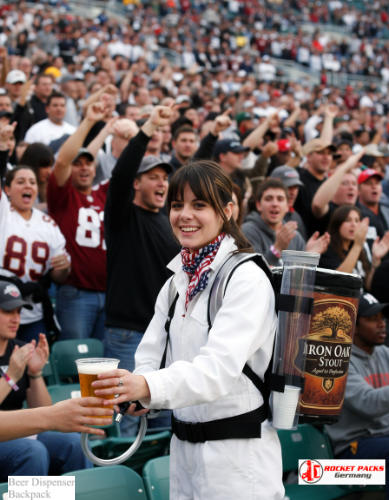
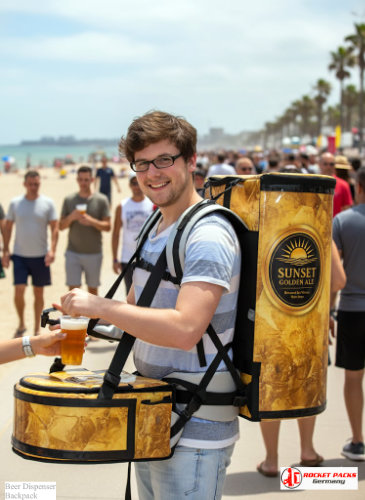
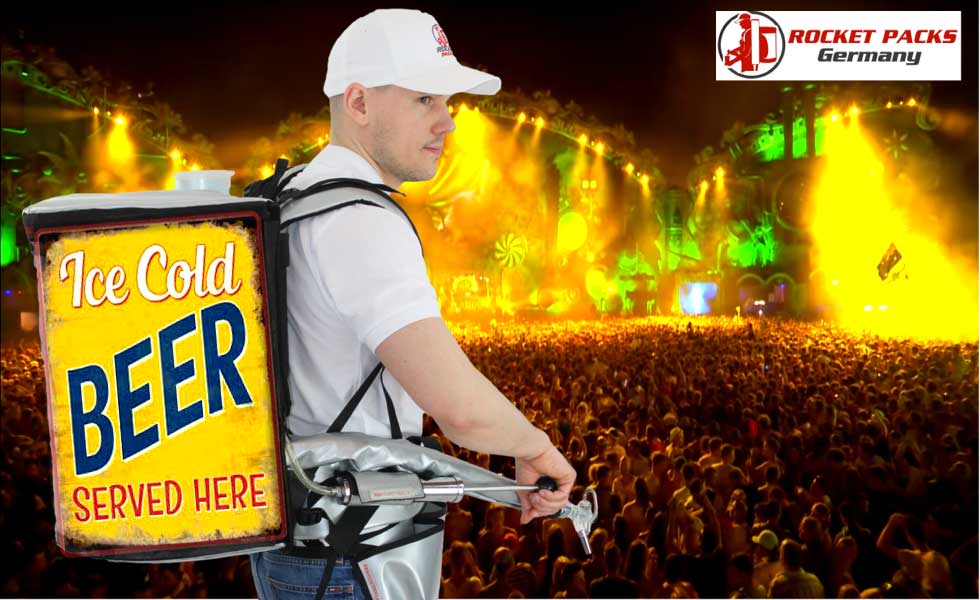
A beer keg dispensing backpack connects a stationary beer supply with a mobile serving system. The beer is normally transferred from a brewery keg into a smaller beverage container carried inside the backpack. The following answers explain which keg information, filling equipment and pressure components must be clarified before the system can be used.
What does the term beer keg dispensing backpack mean?
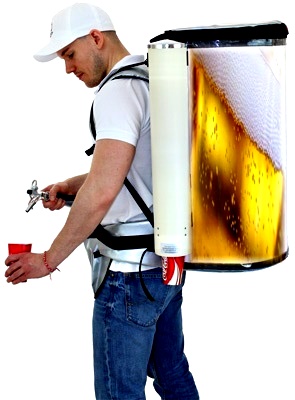
The term describes a portable dispensing system that can be filled with beer supplied from a keg. The mobile beverage container, hose, pressure source and dispensing tap are carried by the operator.
In most configurations, the original brewery keg remains at the preparation or refill station. It is not carried through the venue.
Does the operator carry a standard 30- or 50-litre beer keg?
No. Standard brewery kegs of this size are too large and heavy for use inside a wearable beverage backpack. They normally serve as the source from which beer is transferred into the smaller mobile container.
Rocket Packs beverage systems are available with substantially smaller containers, depending on the selected model and application. A separate compact configuration is available for certain commercially available 5-litre party kegs.
Why must the keg type be identified before ordering?
Breweries use different keg valves and coupler systems. A filling accessory that fits one keg may not connect to another, even when both contain the same type of beverage.
The beer brand alone is not always sufficient to determine the connection. The country, brewery, keg supplier and actual fitting should also be checked.
Which information helps identify the correct keg connection?
Please provide as much information as possible about the available beer supply:
- Beer brand and brewery
- Country in which the keg was supplied
- Nominal keg capacity
- Known keg or coupler type
- Photograph of the valve on top of the keg
- Photograph of the existing keg coupler
- Details of the current dispensing installation
- Available CO2 regulator and pressure range
A clear photograph of the connection is often more useful than an uncertain description of the coupler type.
Is the keg coupler installed inside the backpack?
Normally, the coupler remains connected to the source keg at the refill station. Beer is transferred through a suitable filling or overflow line into the mobile backpack container.
The backpack then operates as an independent dispensing system with its own beverage line, tap and selected pressure supply.
What is an overflow line for beer?
An overflow line is used to transfer beer from a compatible keg or dispensing source into the mobile beverage container. Depending on the equipment, it may include separate connections for the incoming beverage and displaced gas or air.
The line must match both the source connection and the fitting on the backpack container. It should therefore not be selected solely by hose diameter.
Why is a controlled filling process important?
Beer is a carbonated beverage and may foam heavily when it is transferred too quickly, becomes warm or experiences an unsuitable pressure difference. Controlled filling helps reduce agitation and unnecessary loss of carbonation.
The exact procedure depends on the beer, keg pressure, container type, filling line and available pressure equipment. A practical test should be completed before the first event.
Should the beer be cold before it is transferred?
Yes. The beer should be chilled to the intended dispensing temperature before the backpack container is filled. The backpack is insulated but does not contain an active refrigeration unit.
Transferring warm beer can increase foam formation and make pressure adjustment more difficult. The keg, filling line and mobile container should not be left unnecessarily in a warm environment before use.
What is the difference between filling pressure and dispensing pressure?
Filling pressure concerns the controlled transfer of beer from the source keg into the backpack container. Dispensing pressure moves the beer from the mobile container through the beverage hose and tap during service.
These two processes should not automatically be operated with the same setting. The required pressure depends on the system configuration, beer temperature, carbonation and selected accessories.
Does the mobile container have to be completely filled?
No. A pressurized container used for carbonated beverages requires a suitable free gas space above the liquid. The nominal tank capacity therefore does not necessarily equal the usable beer volume.
For example, an 11-litre container used for beer is generally filled to no more than approximately 80 percent, corresponding to about 9 litres. The precise operating volume must follow the instructions for the selected container and pressure configuration.
Why is free space required inside the container?
The free space allows the pressure inside the container to be established and controlled. Completely overfilling the vessel may interfere with the pressure supply and can force liquid into components intended for gas.
The required filling limit must be respected even when the operator wants to maximize the number of servings from one refill.
Can the beer be dispensed using a manual air pump?
A compatible hand-operated pump can provide the pressure required to move the beer through the hose and tap. This is a straightforward option that does not require a separate CO2 cylinder.
The operator adds pressure when required during service. The pump supplies dispensing pressure but does not actively cool the beer.
When is a CO2 configuration useful?
A compatible CO2 kit supplies pressure without repeated manual pumping. This can be useful when a more consistent pressure supply is preferred during continuous professional service.
The regulator, connections and pressure range must be suitable for the container. Staff must be instructed in the correct installation and handling of the CO2 equipment.
Does CO2 from the pressure kit restore flat beer?
No. The beer should already have the intended carbonation before it is transferred. The principal function of the CO2 system is to provide the pressure needed for dispensing.
A pressure kit cannot reliably correct beer that has lost carbonation because of unsuitable storage, excessive movement, high temperature or an incorrect filling procedure.
Can the same CO2 cylinder supply the source keg and backpack?
This depends on the available dispensing installation and the selected equipment. The source keg and the mobile container may require separate connections, regulators or operating settings.
The complete arrangement should be checked before use. Improvised split connections or unregulated gas supplies should not be used.
Does the keg coupler type determine the backpack model?
Not by itself. The keg coupler mainly determines how the source beer can be accessed for filling. The backpack model is selected according to the required capacity, beverage, service duration, loaded weight and preferred pressure method.
Both sides of the process must nevertheless be compatible: the beer must be transferable from the available keg, and the mobile container must be equipped for the intended dispensing method.
Can a sealed brewery keg be connected directly to the dispensing tap on the backpack?
A standard Rocket Packs beverage backpack normally carries its own smaller container. The source keg remains at the refill station and is used to fill this mobile vessel.
A direct connection involving a different container or special keg requires an individually compatible system. It should not be assumed that every commercial keg can simply be placed inside or connected to a backpack.
What is the difference between this system and a 5-litre party-keg backpack?
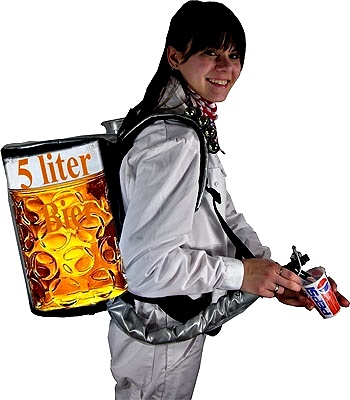
A standard refillable beverage backpack uses a separate mobile tank that is filled from an external source. A party-keg backpack is designed around a compatible commercially available 5-litre beer keg placed inside the insulated carrier.
The party-keg version requires its own keg attachment, beverage line, tap and pressure solution. The two operating concepts should not be confused when ordering accessories.
Can disposable or lightweight beverage containers be used?
Only containers and fittings that are explicitly compatible with the selected backpack and pressure equipment should be used. Disposable containers may have different valves, pressure limits and connection methods from reusable stainless steel tanks.
The exact container manufacturer and fitting must be identified before a compatible tapping or filling solution can be assessed.
Can one backpack be refilled from different breweries’ kegs?
The mobile container itself can be filled with different suitable beers after proper cleaning. However, the source kegs may require different couplers or filling connections.
When several breweries participate in one event, the organizer should check every keg system in advance rather than assuming that one coupler fits all brands.
How can several keg connections be managed at a beer festival?
The refill station can prepare the required couplers and filling accessories for the participating breweries. Each component should be clearly identified to prevent incorrect connections.
A practical preparation list may include:
- Beer and brewery name
- Keg connection type
- Matching coupler
- Required filling line
- Recommended filling procedure
- Assigned backpack or mobile container
- Cleaning status
Testing all planned combinations before visitors arrive can prevent delays during the event.
Can beer remain inside the backpack container between events?
The backpack should not be treated as a long-term beer storage system. Remaining product should be handled according to the beverage producer’s instructions and the operator’s hygiene procedures.
For normal mobile service, the container, hose and tap should be emptied and cleaned promptly after use. Leaving beer residue inside the system can affect hygiene, flavour and tap function.
Does removing a connection automatically make the beer suitable for storage?
A self-closing valve may close when a compatible connection is removed, but this alone does not guarantee the quality or storage life of the remaining beverage.
Temperature, cleanliness, carbonation, time since filling and the beverage manufacturer’s requirements must also be considered. No general storage period should be promised for an opened or transferred beer.
Does the backpack require industrial steam sterilization?
No. Industrial steam treatment is part of the automated cleaning and preparation process used for certain commercial brewery kegs. It is not the normal cleaning procedure for a Rocket Packs beverage backpack.
The backpack container, beverage line and tap should be cleaned using the method and suitable cleaning product specified for the mobile dispensing system.
How should the filling line be cleaned?
The filling or overflow line is a beverage-contacting component and must be included in the cleaning process. Beer residue should be rinsed out before it can dry inside the hose or fittings.
A suitable beverage-system cleaning solution can be passed through the line according to the product instructions. Afterwards, rinse it thoroughly with clean water and allow it to drain and dry.
Should the keg coupler also be cleaned?
Any coupler surfaces and passages that contact the beer must be kept hygienically clean. The cleaning method depends on the coupler and the existing keg installation.
The brewery, keg supplier or dispensing-equipment provider should be consulted when the correct cleaning procedure for an unfamiliar coupler is not known.
What should be inspected before the filled backpack is issued?
The prepared system should be tested away from the public service area. The inspection should include:
- Correct filling level
- Secure container closure
- Correct pressure connection
- Tight beverage and gas fittings
- Absence of visible leaks
- Controlled flow through the tap
- Acceptable foam behaviour
- Stable fit of the backpack harness
The test should be completed with the intended beer because water does not reproduce the same carbonation and foam behaviour.
What information is required for a keg-compatible quotation?
The enquiry should describe both the source keg and the required mobile dispensing system. Please provide:
- Beer brand and brewery
- Country of the keg system
- Keg capacity and connection type
- Photographs of the keg fitting and coupler
- Existing dispensing or filling equipment
- Required number of backpacks
- Preferred mobile container capacity
- Manual pump or CO2 preference
- Expected serving volume
- Cup size and rim diameter
- Event date or requested delivery date
- Delivery country, postal code and city
If the keg connection is unknown, send clear photographs before ordering. This allows the filling method and required accessories to be checked more reliably.