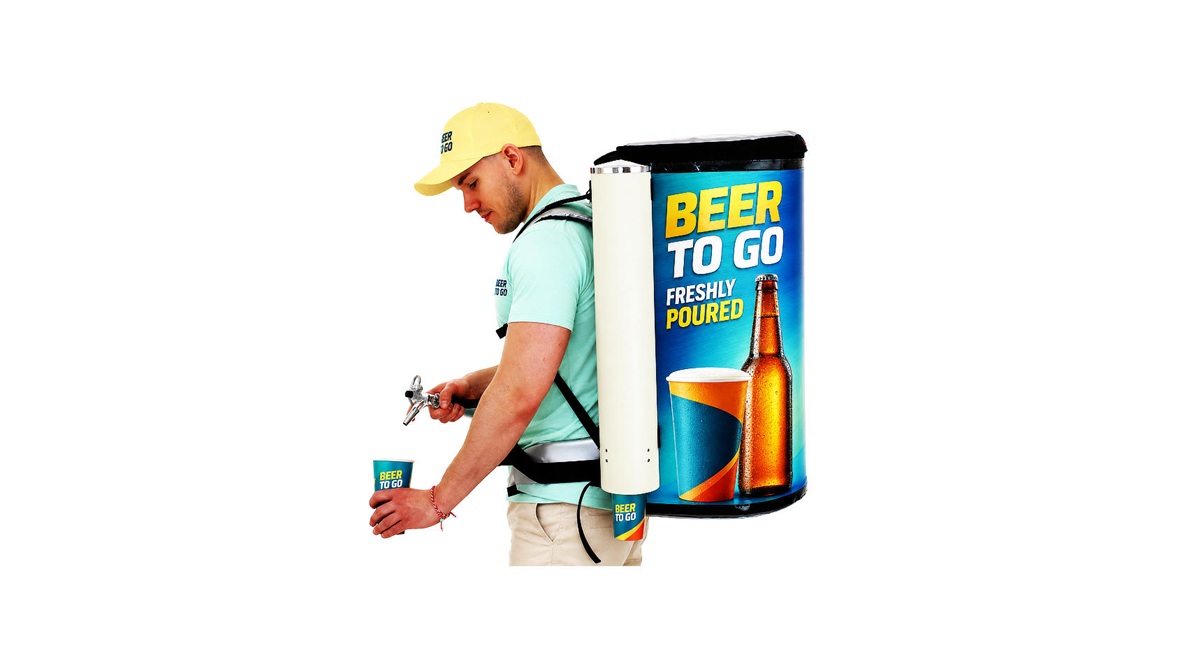
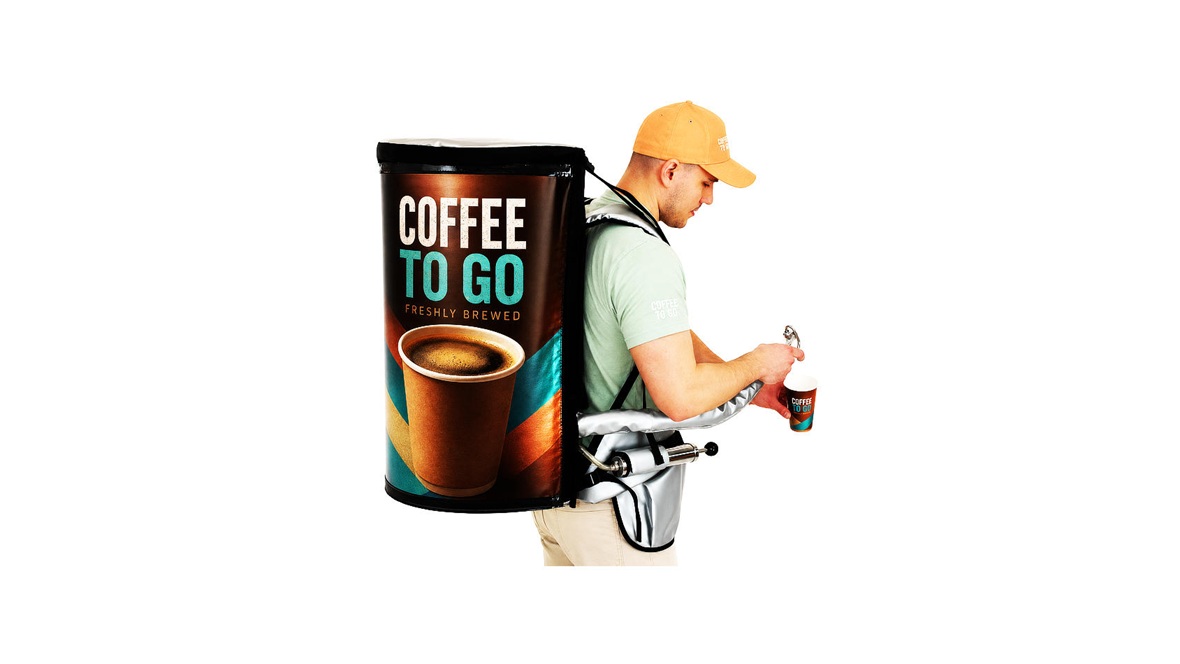
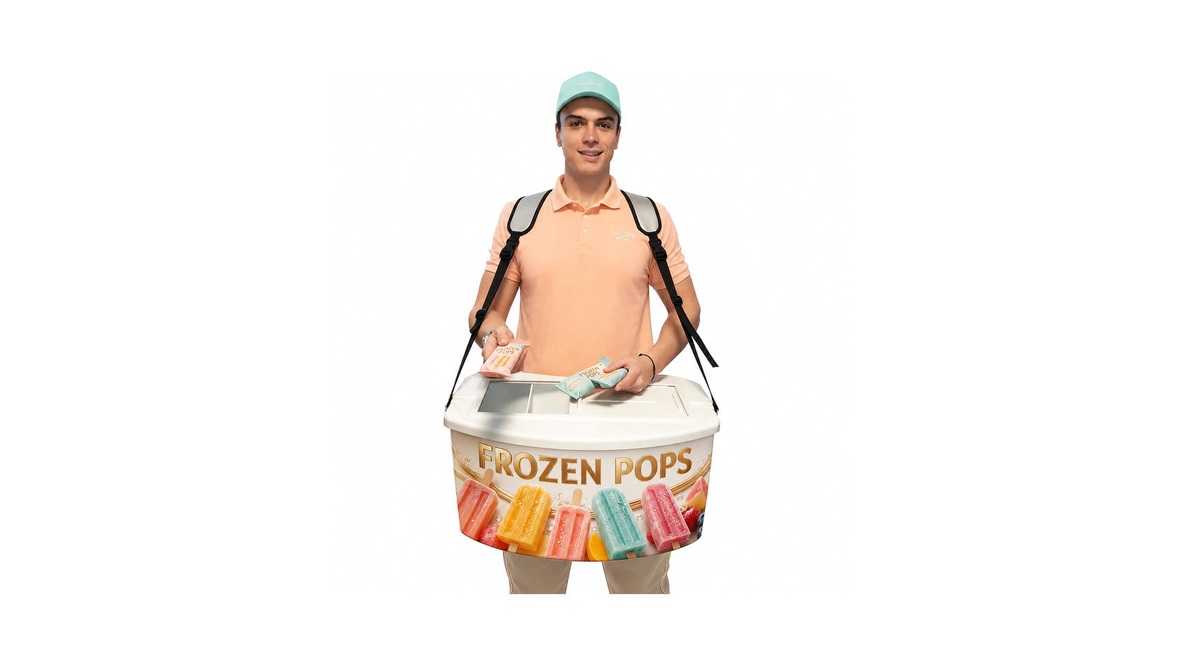
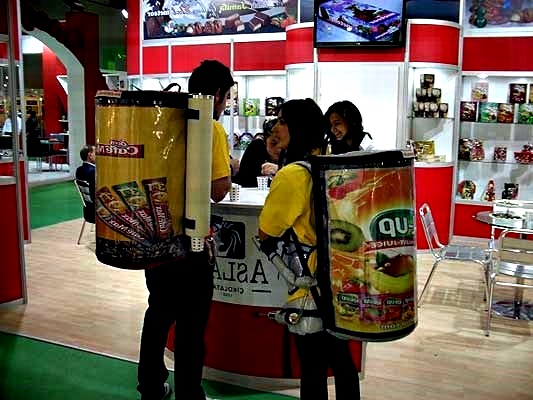
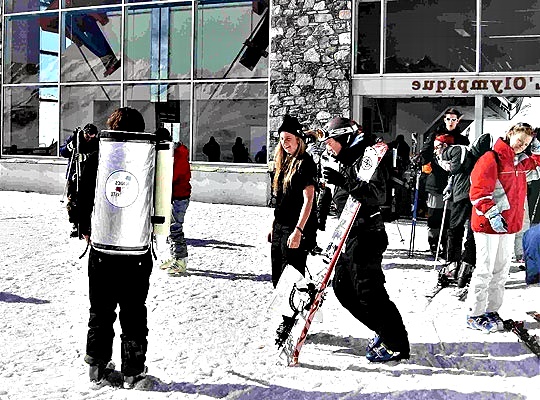
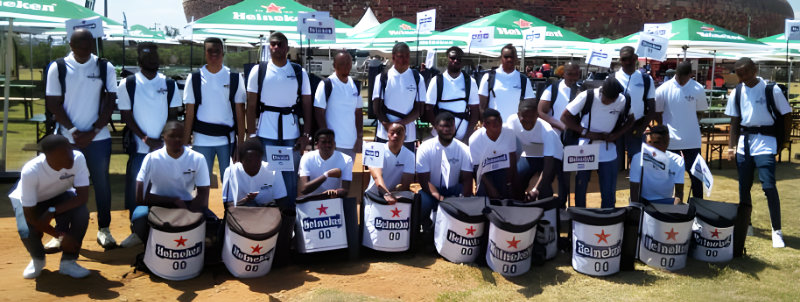
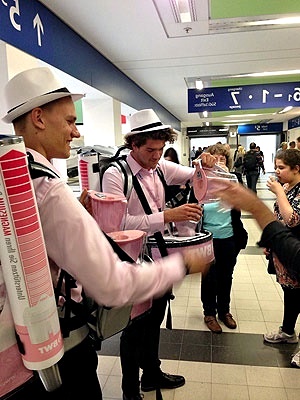
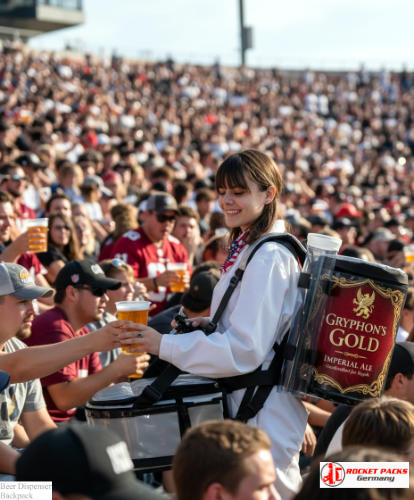
A beer dispensing backpack combines a beverage container, pressure supply, hose and dispensing tap in one portable system. Choosing the correct configuration depends on the beer, the required capacity, the filling method and the conditions at the venue. These answers explain the most important technical and operational points before ordering.
What is a beer dispensing backpack?
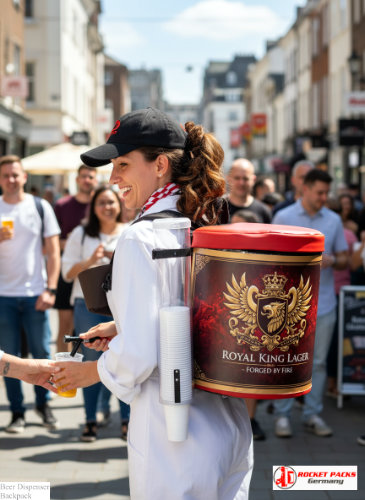
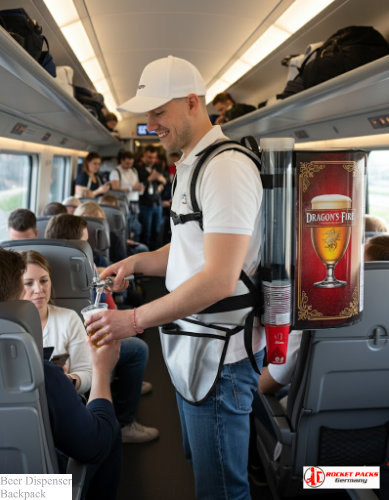
A beer dispensing backpack is a portable draught system that allows a trained operator to carry and dispense beer while moving through an event area. The beverage is stored in a container inside the backpack and flows through a hose to a hand-operated tap.
The system can supplement fixed bars, kiosks and dispensing stations by bringing the serving point closer to visitors.
How does a dispensing backpack differ from a can and bottle backpack?
A dispensing backpack carries beer inside a beverage container and serves it through a hose and tap. It therefore requires a suitable pressure supply and must be cleaned as a complete beverage system after use.
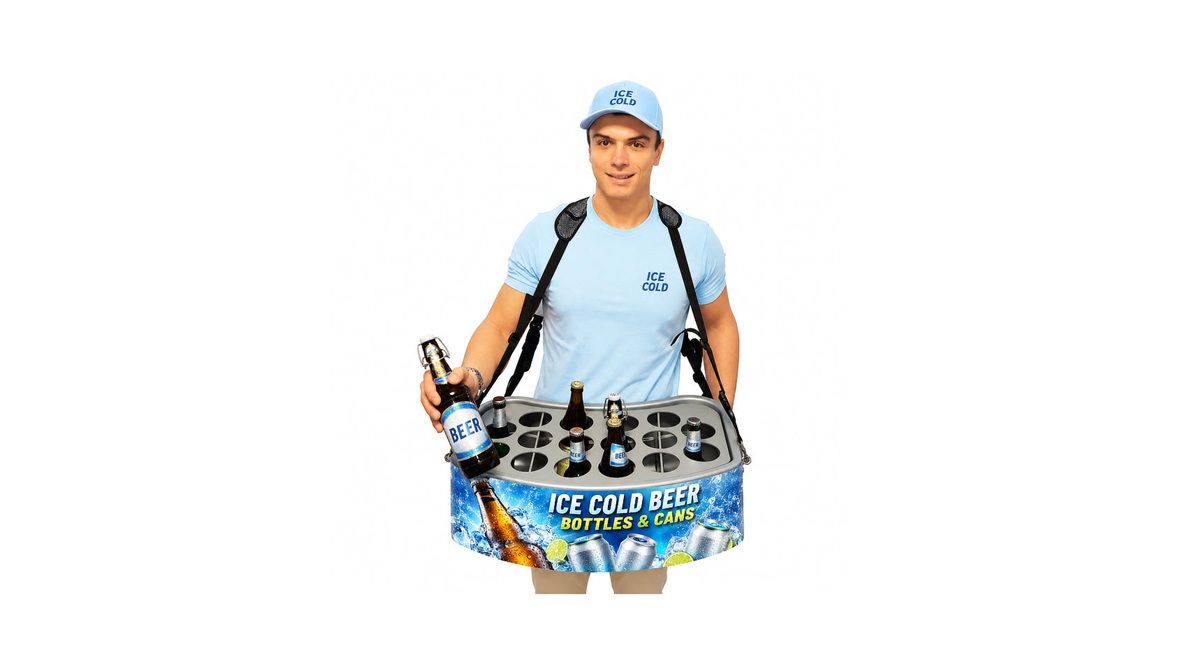
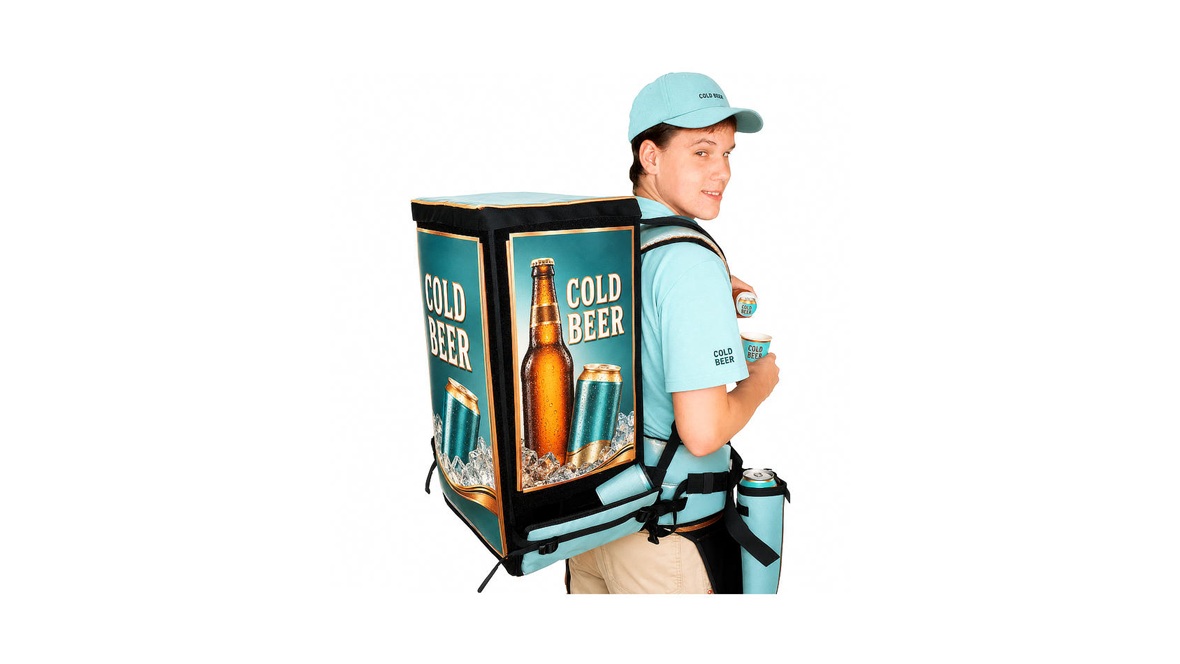
A can and bottle backpack contains separate refrigerated cans or bottles in insulated compartments. It does not dispense liquid from an internal tank. The two systems are intended for different sales and distribution processes.
Which components form a complete mobile draught system?
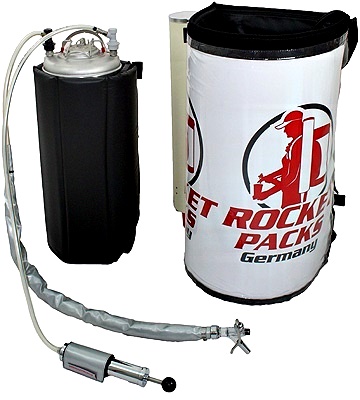
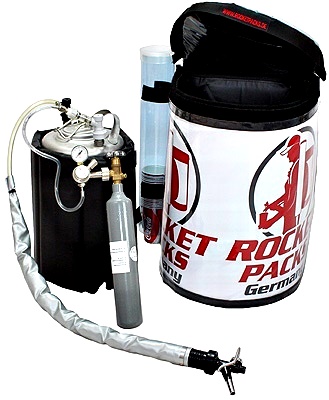
The individual components must be compatible with the selected beverage and operating method. A typical configuration may include:
- Food-compatible beverage container
- Insulated backpack cover
- Shoulder straps and waist belt
- Beverage hose
- Dispensing tap
- Manual pressure pump or CO2 equipment
- Filling or transfer accessories
- Cup dispenser, where required
The exact equipment depends on the backpack model. Accessories and filling connections should be clarified before the order is confirmed.
Which container material is suitable for dispensing beer?
Beer backpacks are available with different container materials. Stainless steel containers are suitable for repeated professional beverage use and can be combined with the required pressure and dispensing components.
Plastic containers may be used in selected configurations but can absorb colour or aroma from certain beverages over time. The intended beer, frequency of use and cleaning process should therefore be considered when choosing the model.
Why must beer be chilled before filling the backpack?
The backpack provides insulation but does not actively refrigerate the beverage. Beer should therefore be brought to the required serving temperature before it is transferred into the container.
Warm beer is more difficult to dispense and can create excessive foam. The insulation slows down temperature changes, but the result depends on the initial beverage temperature, ambient conditions, sunlight, filling level and length of the service period.
What can cause excessive foam during dispensing?
Foam formation is not controlled by one component alone. Several factors influence the pouring result:
- Beer temperature
- Pressure setting
- Condition and cleanliness of the hose
- Adjustment of the dispensing tap
- Filling method
- Movement of the backpack
- Type and carbonation level of the beer
- Dispensing technique of the operator
A practical test with the actual beer should be completed before the event. No mobile system can guarantee foam-free dispensing under every operating condition.
What is the purpose of a compensator tap?
A compensator tap allows the flow rate to be adjusted directly at the dispensing point. This can help the operator adapt the serving speed to the pressure, beer and cup size.
The compensator does not replace correct temperature and pressure settings. All parts of the system must work together to achieve a controlled pour.
Should I choose a manual pump or a CO2 system?
A manual pump is a simple and cost-effective way to create dispensing pressure. The wearer operates the pump as required during service.
A compatible CO2 system supplies pressure automatically and reduces repeated manual pumping. It can be useful for continuous professional operation, but requires appropriate handling and pressure adjustment.
Neither option cools the beer. A CO2 kit should also not be treated as a way to correct beer that is already warm, flat or improperly prepared.
Does the pressure system carbonate the beer inside the backpack?
The primary purpose of the pressure system is to move the beverage from the container through the hose and tap. It should not be relied upon to create or restore the intended carbonation of the beer.
The beer should already have the correct product characteristics before filling. Pressure must be adjusted to the beverage and the selected dispensing components.
Can the backpack be filled from an existing beer keg?
Beer can be transferred from a compatible keg or beverage source using an appropriate filling or overflow line. The necessary connection depends on the keg system, coupler, pressure conditions and backpack container.
Please identify the keg type when requesting a quotation. Photographs or technical details of the available connection can help determine which filling accessories are required.
Why is the usable beer volume lower than the nominal container capacity?
A container used with a carbonated beverage requires sufficient free space above the liquid for safe pressure operation. It should therefore not automatically be filled to its full nominal capacity.
The practical serving volume also includes allowances for foam, test pours and small residual quantities in the hose and container. Event planning should be based on the usable filling volume rather than the container designation alone.
How can I estimate the number of servings from one filling?
Divide the planned usable beverage volume by the intended serving size and then allow for operational losses. The actual result can be affected by test dispensing, foam, partially filled cups and beverage remaining inside the system.
For a realistic calculation, consider:
- Usable filling volume
- Selected cup size
- Expected dispensing losses
- Distance to the refill station
- Duration of each selling period
- Expected demand in the assigned service area
Is an 11-litre or 19-litre system more suitable?
A smaller system is easier to handle and may be preferable when staff must walk longer distances or when frequent refilling is possible.
A 19-litre model provides more capacity but creates a substantially higher loaded weight. The physical capability of the wearer, length of the shift, walking route and planned refill cycle must be considered before choosing the larger configuration.
Can different beer varieties be served from the same backpack?
Different beers can be used at separate times, provided that all beverage-contacting components are cleaned correctly before the product is changed.
Switching beverages without cleaning may transfer flavour, aroma or residue from one beer to another. During an event, clearly assigning each backpack to one beverage can reduce filling errors and simplify staff coordination.
Can other beverages be dispensed from the same system?
The backpacks are generally designed for clear, low-viscosity beverages. Still drinks, selected carbonated beverages and certain hot drinks may be possible with an appropriate configuration.
Liquids containing pulp, fruit pieces, seeds, thick ingredients or substantial sediment may block the hose, fittings or tap. The exact beverage must be assessed before the system is selected.
How should the hose and tap be positioned during service?
The hose should be routed so that it does not catch on surrounding objects or interfere with the wearer’s movement. The tap must remain accessible while also being secured when the operator is walking.
Staff should practise reaching, operating and returning the tap to its carrying position before entering a crowded service area.
What should be considered when adjusting the backpack?
The shoulder straps and waist belt should be adjusted to the individual wearer. The filled unit should sit close to the body and remain stable during walking and dispensing.
The fit must be tested with the expected operating weight rather than with an empty backpack. Work periods and breaks should be planned according to the capacity, route and physical demands of the assignment.
Can promotional graphics be displayed on the backpack?
Depending on the model, the backpack may include transparent foil windows or other visible areas for printed advertising material. These surfaces can be used for a beverage brand, sponsor, campaign or event-specific message.
The dimensions differ between models. The correct measurements should be confirmed before artwork is finalized. Graphic design and printing are not automatically included with the backpack.
How must the dispensing system be cleaned after use?
The container, hose and tap should be cleaned immediately after service before beer residue can dry inside the system. First empty the remaining beverage and rinse the complete liquid path with clean water.
An appropriate beverage or beer-line cleaning solution can then be circulated through the container, hose and tap according to the cleaning product instructions. Afterwards, rinse all components several times with clean water.
Allow the system to drain and dry before storage. Regular cleaning supports hygiene, neutral flavour, reliable tap operation and controlled dispensing.
What should be checked before every event?
A complete functional test should be carried out before the backpack is issued to the wearer. The inspection should include:
- Cleanliness of all beverage-contacting components
- Secure hose and fitting connections
- Correct installation of the pressure equipment
- Absence of visible leaks
- Appropriate beverage temperature
- Controlled pressure and flow
- Correct adjustment of the harness
- Compatibility of cups and cup dispenser
The system should be tested with the actual beverage rather than with water alone when dispensing performance and foam behaviour are being evaluated.
Can beer dispensing backpacks be purchased directly from Rocket Packs?
Rocket Packs supplies beverage backpacks directly to companies, event organizers, breweries, agencies, caterers and private customers. The appropriate model and accessories are selected according to the intended application.
A formal quotation can be prepared after the required configuration, quantity and delivery destination have been clarified.
What information is required for a detailed quotation?
Please provide enough information to assess the complete dispensing process rather than naming only the required number of backpacks.
- Required quantity
- Type and brand of beer
- Still or carbonated beverage
- Preferred container capacity
- Existing keg and keg connection
- Manual pump or CO2 preference
- Cup volume and rim diameter
- Required filling accessories
- Required advertising areas
- Planned event or delivery date
- Destination country and postal code
- Complete billing and delivery address for the quotation
If no model has yet been selected, describe the venue, expected serving volume, refill process and working conditions. This information makes it easier to identify a suitable beer dispensing backpack configuration.